Mandala Art
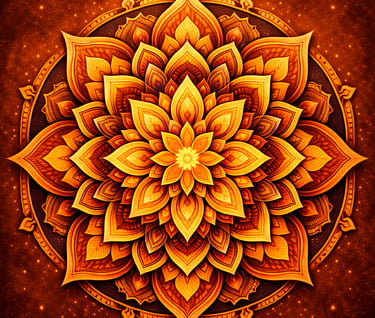
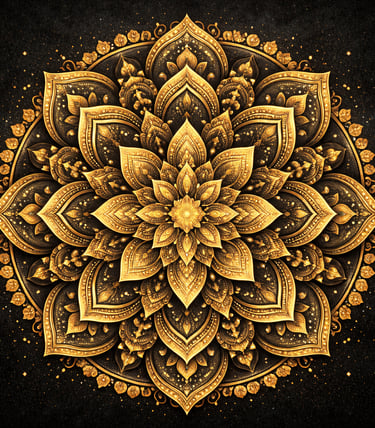
Mandala Art promotes calm & reduces stress. Creating or coloring mandalas encourages a slow, repetitive movement and focused attention which is very similar to meditation.
Colouring a pre-drawn structured mandala can help a client with anxiety or emotional dysregulation. It’s especially good for those who are new to therapy and/or presenting with symptoms of trauma as it feels non-threatening and allows the client to go inward without any expectations.
Structure provides containment and calm. Once the client is emotionally stable enough they can move to open mandalas that help with exploration, insight, and self-reflection. Open mandalas allow freedom inside of the circle and allows for unconscious material to surface. Mandalas encourage repetition, symmetry, rhythm, and patterns that calm the nervous system while expression happens, and this alone can lower anxiety and increase body awareness. With gentle self-reflection, the client assigns meaning for themselves without external interpretation and this promotes safety.
A mandala becomes a bridge between inner experience and everyday life. When paired with breathing or somatic (body-based) techniques, Mandalas can settle the nervous system, re-ground, and restore balance. Mandalas can also be powerful for trauma recovery and helping with treating depression.
The circle creates psychological safety, the feelings stay “inside the circle”, and there is less risk of emotional flooding.
THE MANDALA IS A MIRROR….NOT A DIAGNOSIS
It can lower anxiety, quiet racing thoughts, and help your nervous system shift into a more relaxed state.
It also improves focus and mindfulness. Because mandalas have a clear center and structured patterns, they gently pull your attention into the present moment. That can be especially helpful if you struggle with overthinking, ADHD, or mental fatigue.
It supports emotional expression (without words) Not everyone can—or wants to—talk about what they’re feeling. Mandala art allows emotions to come out symbolically through color, shape, and pattern, which can feel safer and more natural.
Mandala art encourages self-awareness and insight, which can help with revealing mood, inner conflicts, or needs you might not consciously notice otherwise.
It can create a sense of balance as the circular form represents wholeness and containment. For people feeling overwhelmed or scattered, working within a circle can feel grounding and reassuring—like creating order out of chaos.
It can also boost self-esteem and creativity. There’s no “right” way to make a mandala. Finishing one gives a sense of accomplishment, and many people are surprised by how creative they actually are.
The structured creativity of drawing a mandala can be helpful for trauma, depression, and anxiety. Research and clinical practice suggest mandala work can be especially beneficial for anxiety disorders, depression, trauma recovery, grief, chronic illness or pain. It’s often used alongside talk therapy, not as a replacement. Also, you don’t need artistic skill, fancy materials, or deep introspection. A pen and paper is enough.
Mandalas help with the breath in a subtle but very real, body-based way. Here’s whats happening:
They naturally slow your breathing. When you focus on repetitive shapes, symmetry, or coloring inward-outward, your attention settles. The nervous system reads this as safe, and breathing often becomes slower, deepens into the belly, and shifts from shallow chest breathing to rhythmic breathing. There’s no effort required—your body does it automatically.
The circular motion mirrors the breath cycle. A mandala visually mirrors: Inhale – expansion and exhale – release. As your eyes follow the circle or your hand moves around it, the body often entrains to that rhythm—much like watching waves can slow breathing.
Drawing or coloring a mandala involves steady, controlled hand motion and fine motor engagement. This activates brain areas connected to breath regulation and the parasympathetic nervous system. In simple terms: calm hands = calm breath.
It reduces breath-interrupting thoughts as anxiety often disrupts breathing by over-monitoring the breath, catastrophic thinking, and/or tension in the jaw, throat, or chest. Mandalas give the mind something neutral and absorbing to rest on, allowing breathing to normalize without force.
They encourage exhalation as people tend to unconsciously color or draw during the exhale and pause naturally between shapes. Longer, softer exhales are especially calming for the nervous system. Therapists sometimes quietly pair mandalas with breath awareness - Inhale as attention moves outward and Exhale as attention moves inward. This is grounding, non-intrusive, and works well for people who struggle with formal breathwork.
Helpful for people who find “focus on your breath” stressful. For trauma survivors or anxious clients, direct breath focus can feel threatening, dysregulating, or too intense. Mandalas offer an indirect pathway to breath regulation—safe, optional, and self-paced.
Think of it this way: Mandalas “Give the body something calming to do, and the breath follows.”


Contact
For a confidential no obligation session to understand emotional wellness and counseling, reach out to us.
Phone
© 2025. All rights reserved.